Welcome, you are in


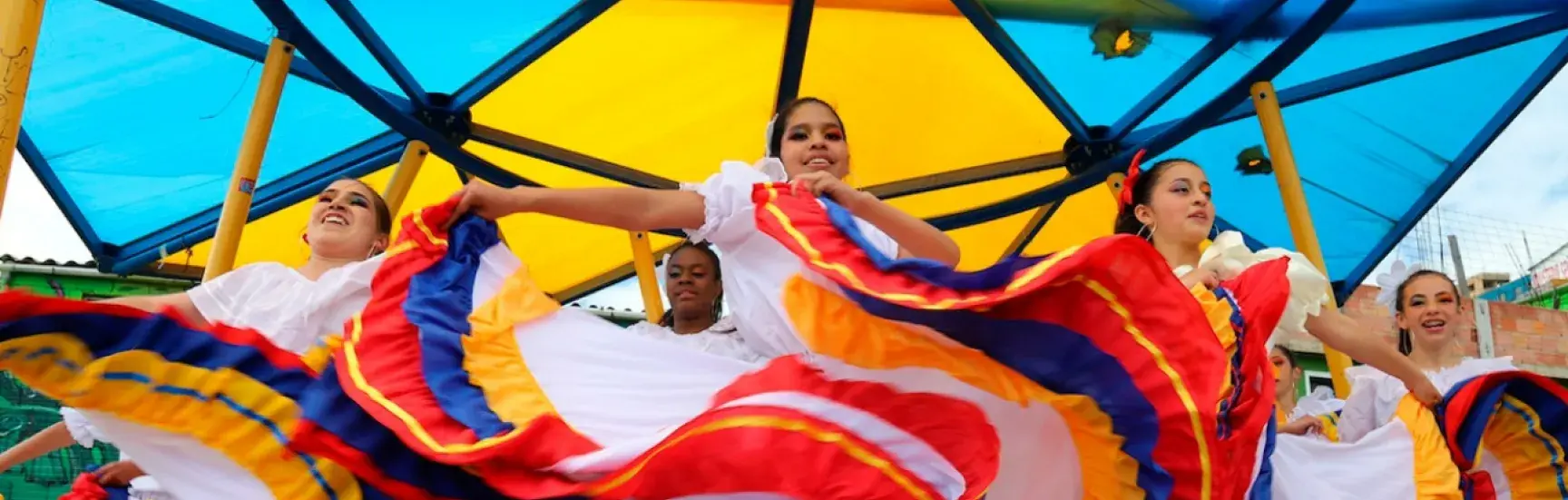


Everything you need to know about Cumbia
Cumbia is Colombia’s national dance, one of its most representative rhythms and the source and inspiration behind much
Cumbia is Colombia's national dance, one of its most representative rhythms and the source and inspiration behind much of the country's popular music. Cumbia has been with Colombia from the beginning but, thanks to bands like Bomba Estereo, it's once again emerging onto the international stage. Here's everything you need to know:
Where did cumbia come from?
Cumbia, just like Colombia, is a blend between European, African and indigenous cultures. It was born on Colombia's Caribbean coast where it was originally an African courtship dance that evolved with the addition of African, European and indigenous instruments and indigenous dance steps.
What does it involve?
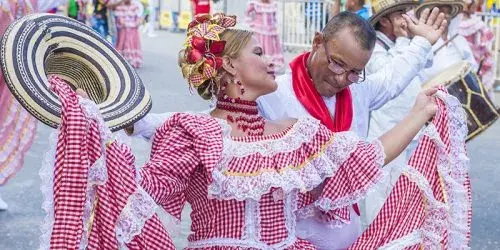
To dance cumbia you need one of two musical ensembles – a conjunto de cumbia (also known as a cumbiamba) or a conjunto de gaitas. The cumbia ensemble has five instruments the caña de millo (millet cane) or pito, which is a type of clarinet, the tambor mayor (a drum held between the legs, played with both hands) the llamador (a drum balanced on the knee, played with one hand) the bombo (a two-headed drum played with two sticks) and a rattle, usually the guache (a tubular rattle filled with seeds) or maracas. The gaitas ensemble has two gaitas (duct flutes) – the gaita hembra and the gaita macho - alongside
How do you dance it?
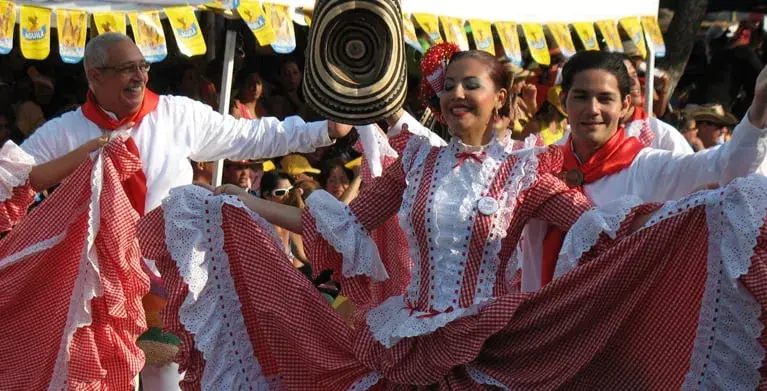
Cumbia really should be danced at night, with couples dancing in a circle around seated musicians. The woman makes shuffling steps while the man moves in a sort of zig-zag around her. At night, women hold bundles of candles wrapped in colored handkerchiefs in their right hands. Nowadays traditional cumbia is only really performed at carnivals and candles are not used during the day, although the handkerchiefs remain. Learn here how to dance like a Colombian.
What has it influenced?
Cumbia influenced vallenato, another Caribbean coastal genre, which has a similar beat with vocals, an accordion, a drum and a guacharaca (notched gourd scraper). Centuries later cumbia influenced musica tropical, which began with the dance band arrangement of African-Colombian music in the 1940s. Groups including La Sonora Dinamita, Los Corraleros de Majagual and Los Graduados had a lot of success and helped spread musica tropical to Mexico, Central America, Ecuador, Peru, Bolivia and Chile. Currently, artists including Carlos Vives, Fonseca and Cabas have all been influenced by cumbia and some Colombian cities, such as Medellin, are seeing a resurgence in large, ballroom-style cumbia gatherings. When it's a question of dancing to the world's hottest beats, the answer is Colombia. Please feel free to share this article on Facebook, Twitter, LinkedIn, Google+ or any of your social networks.
Musical instruments of Colombian cumbia
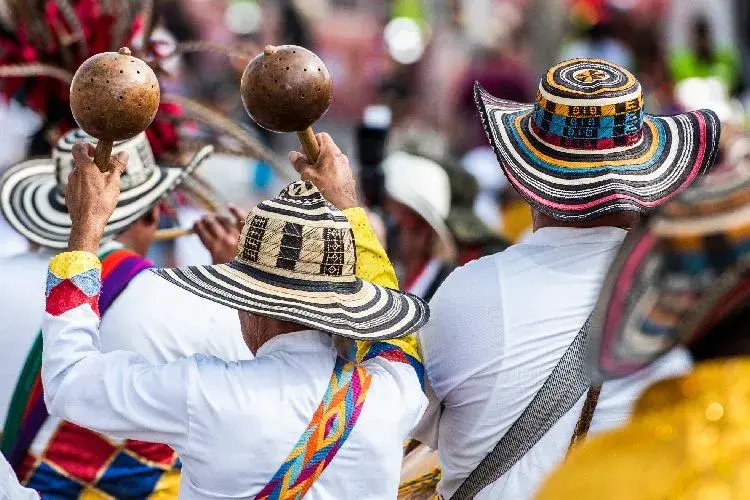
Cumbia mixes various Colombian musical instruments and others originating from Africa, such as:
- The gaita, a kind of 80-centimeter flute created by the Kogui Indigenous people. It can be female, male, or short.
- The guache, a variation of the maraca that accompanies improvisations led by the drum. Usually made from guadua or bamboo and filled with seeds.
- Traditional maracas and the maracón.
- The drums, both African-origin and Indigenous, are essential to marking the rhythm. The drums used are the llamador drum, tambora alegre, and the tambora or bombo, the largest.
Traditional Colombian cumbia costume
To dance the Colombian cumbia, the traditional costume for women consists of a wide skirt, also known as a “pollera”, decorated with appliqués and ribbons, and a ruffle at the bottom. Blouses usually have exposed shoulders and puffed sleeves. Men wear white pants and shirt, a typical ‘vueltiao’ hat from the region, and a red scarf colloquially called ‘rabo e gallo’.

Unique features of the cumbia dance
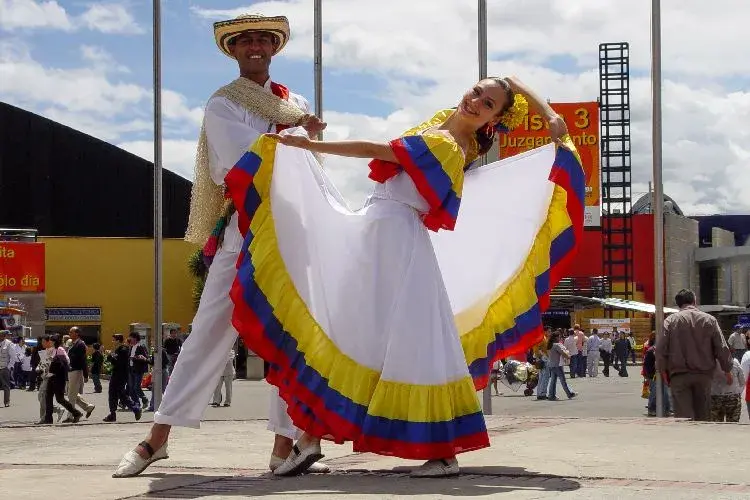
One peculiarity of the dance is that the woman plays with her skirt and raises a lit candle with one hand, dripping paraffin (formerly they used torches) to illuminate and defend herself from the man’s courtship. In contrast, men always wear a sombrero vueltiao which they use to playfully try to extinguish the candles, a gesture of teasing. Generally, dancers treat their partners to two or three candles.
Festivals and representative songs of cumbia
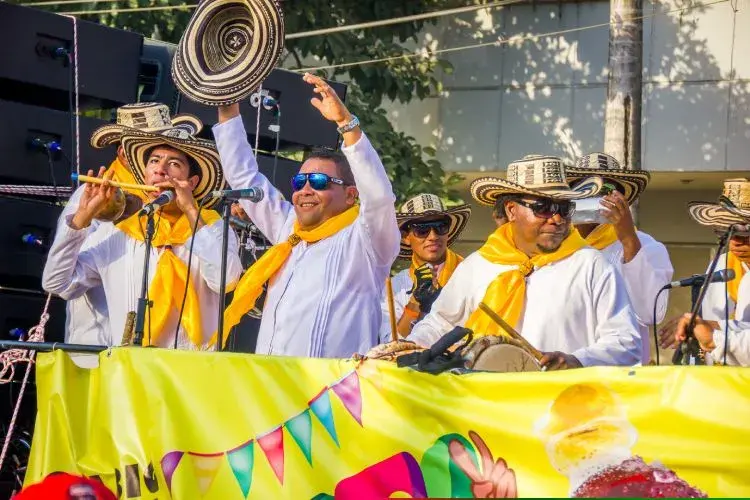
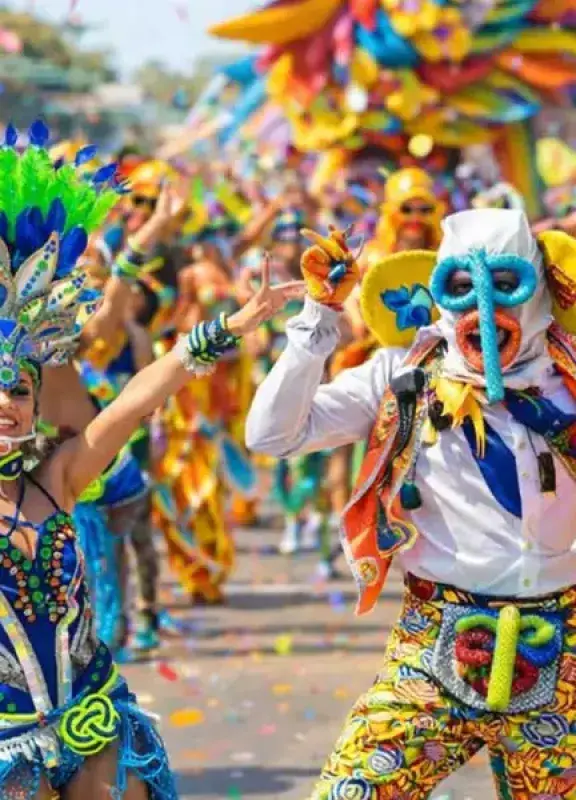
The most important festivals are the José Barros National Cumbia Festival, National Cumbiamba Festival, Sirenato de la Cumbia, Caribbean Colombian Native Cumbia Festival, Cumbia Dancers Festival, and even the Barranquilla Carnival. Some of the most representative Colombian cumbia songs are: La Pollera Colorá, La Piragua, and La Cumbia Cienaguera.
You may also enjoy: