Welcome, you are in





Almirajo: golden fruit from Chocó that preserves the memory of the jungle
Almirajo, the golden fruit of Chocó, encapsulates in its flavor the memory of the Pacific and the richness of Colombia's native fruits.
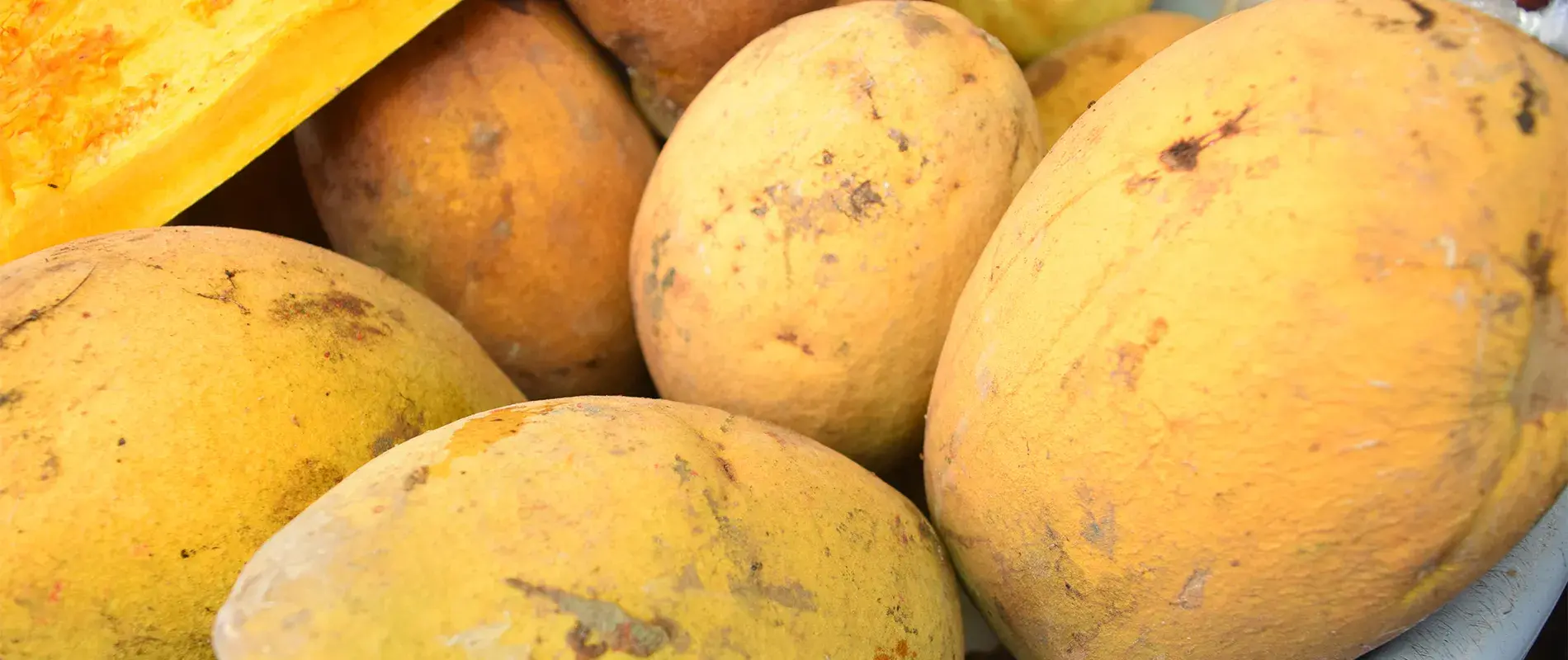
In the markets of Quibdó, among piles of plantains, borojó, and fresh cacao, a long fruit with a dull yellow skin and a soft aroma sometimes appears. Not everyone recognizes it, but those who grew up in the Pacífico Colombiano know it as a daily treasure: the almirajo. This fruit is an important part of the region’s identity and a great example of how the country of beauty holds secrets to be discovered.
What Makes Almirajo So Special?
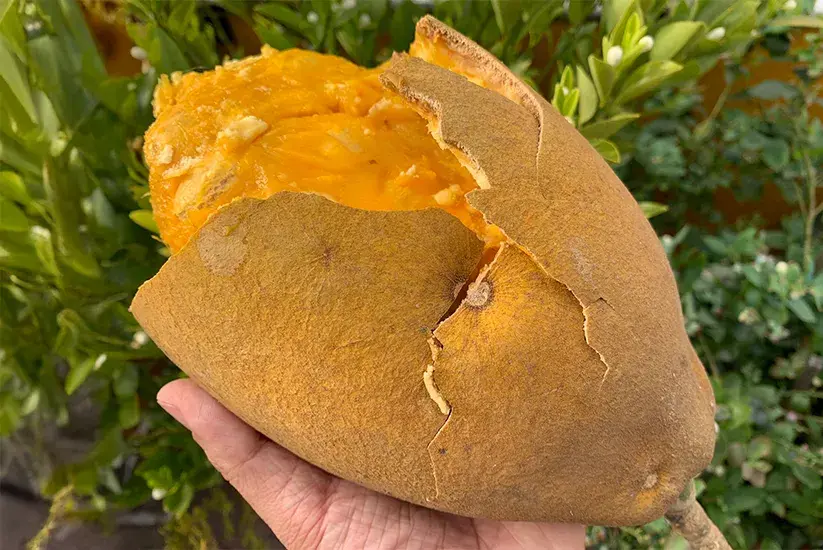
The almirajo fruit belongs to the mallow family. It grows on tall trees up to 18 meters high, scattered in the humid forests of Darién and around the Río Atrato. Due to its wild nature, it is rarely cultivated in large plantations, and most fruits are harvested directly from the forest, making it a product linked to food sovereignty and a golden fruit of Chocó with cultural significance among Afro and Indigenous communities of the region.
Its appearance is unmistakable: it is a large fruit, between 20 and 40 centimeters long, with a hard shell and creamy yellow pulp. When tasted, its texture resembles firm papaya with a slightly starchy touch, and its flavor is a delicious blend of banana and apple, with a subtle acidity that makes it refreshing. For this reason, in many households in Chocó it is eaten fresh, directly in bites, and also prepared in almirajo drinks that accompany daily meals.
You may also like: Traditional Colombian beverages that are a cultural tradition
How Is the Almirajo Tradition Lived in the Pacífico Colombiano?
In Chocó, almirajo is not just food: it is tradition, territory, and identity. Since ancestral times, its harvest has been tied to the natural rhythm of the forest and to knowledge passed down through generations. In many rural communities, its arrival marks moments of abundance, when families go out to look for ripe fruits in the dense jungle.
Children often enjoy it as a natural sweet, while adults transform it into preparations that mix creativity and memory. In towns near Nuquí, for example, it is common to find almirajo sweets or handmade sorbets that refresh during the region’s humid heat. Others prepare it in milk-based juices or cold creams, blending tradition with a touch of modernity.
This ancestral fruit of Chocó holds centuries of history. Its use nourishes the body and strengthens the connection with the land. By harvesting it directly from the forest, Afro and Indigenous communities maintain a respectful relationship with their environment and help preserve a species that is part of the agrobiodiversity of the Pacific.
What Does Almirajo Bring to the Gastronomy of the Pacific?
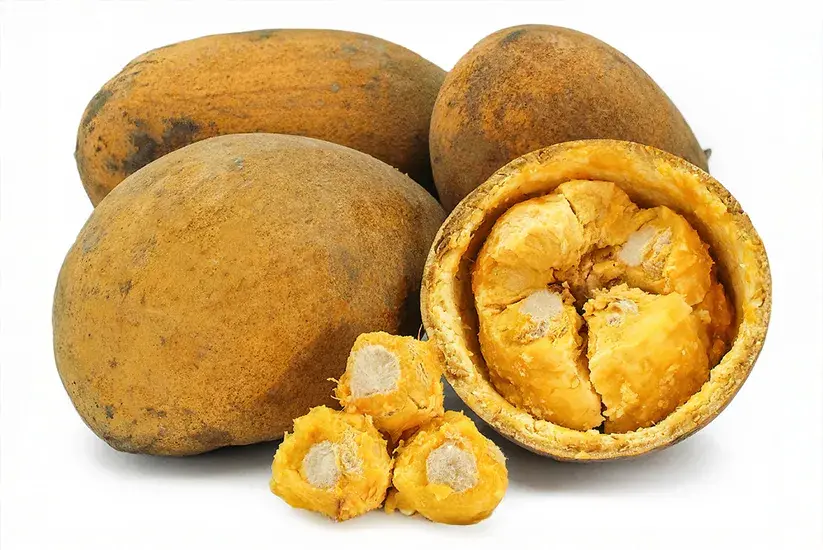
If there is something that distinguishes the gastronomy of the Pacífico Colombiano, it is its ability to combine the local with the universal, and the ancestral with the contemporary. That is why, in this universe of flavors, the almirajo holds a special place.
Its creamy pulp and tropical flavor have inspired both traditional cooks and signature chefs. Some include it in traditional Pacific recipes such as desserts with coconut or Chocó cacao; others reinvent it in mousses, sweet-and-sour sauces for fish, or even tropical cocktails that surprise visitors.
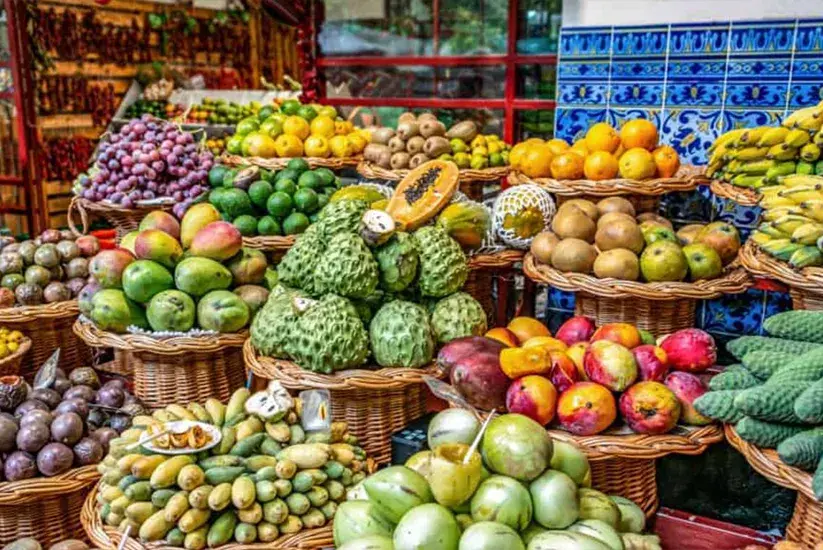
Almirajo also reflects the creative strength of Chocó cuisine with fruits, where ingredients like borojó, guanábana, or caimito are combined with inherited techniques and deep respect for the land. In the fruit markets of Quibdó, this golden fruit appears among the intense colors and sweet aromas of a region that expresses itself through its food.
You may also like: Five news outlets telling the world about Colombia
What Benefits Does This Golden Fruit of Chocó Have?
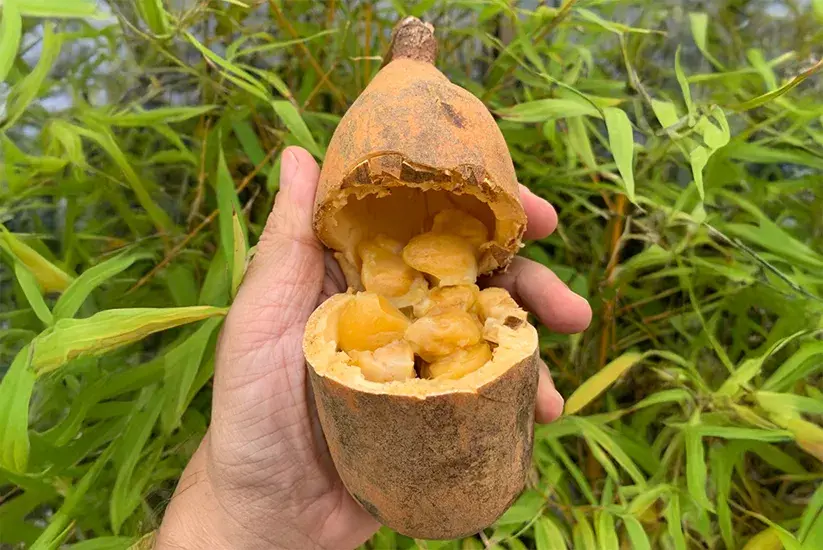
Almirajo is known to be rich in carotenoids, which are responsible for its intense yellow color, and in natural antioxidants that help protect the body. It also provides fiber, minerals, and essential vitamins, making it an ideal ally for a healthy diet. But beyond nutrition, it also has cultural value. Almirajo represents a sustainable alternative within Colombian cuisine, as it is a non-timber forest product that generates income for local communities without the need to cut down trees.
A gastronomic journey to Chocó would not be complete without tasting this fruit. Its flavor is just the starting point for a deeper experience: connecting with a territory that preserves its essence through each ingredient. Eating a freshly opened almirajo on a beach in Nuquí, or drinking a fresh juice in a market in Quibdó, is savoring the history of the Pacífico Colombiano.
In a country where nature is a source of inspiration, almirajo shines as a symbol of biodiversity, tradition, and pride. It is an invitation to look toward the forest, listen to the knowledge of communities, and celebrate the richness of the native fruits of Colombia, which hold in their flavor the soul of the country of beauty.
Plan Your Next Jungle-Flavored Adventure

If reading this made you imagine walking through Pacific markets or trying handmade almirajo ice cream by the sea, don’t think twice. Start planning your trip and let yourself be amazed by the authenticity of this region in the country of beauty. On Viajala you can find flights and take the first step toward a destination where every flavor tells a story. Discover Chocó, its people, and its rainforest, and let yourself be enchanted by the almirajo, a fruit that encapsulates the natural and cultural beauty of Colombia in every bite.
Related articles
- Foods from the Colombian countryside: richness and diversity in every region of the country
- Discover the variety of Colombian arepas!
- Flavor, tradition, and smoothness: route through Colombian coffee