Welcome, you are in




Malpelo Fauna and Flora Sanctuary: conservation and Colombian pride
In the depths of the Pacific, Malpelo protects a unique underwater world, the pride and symbol of Colombia's marine biodiversity.
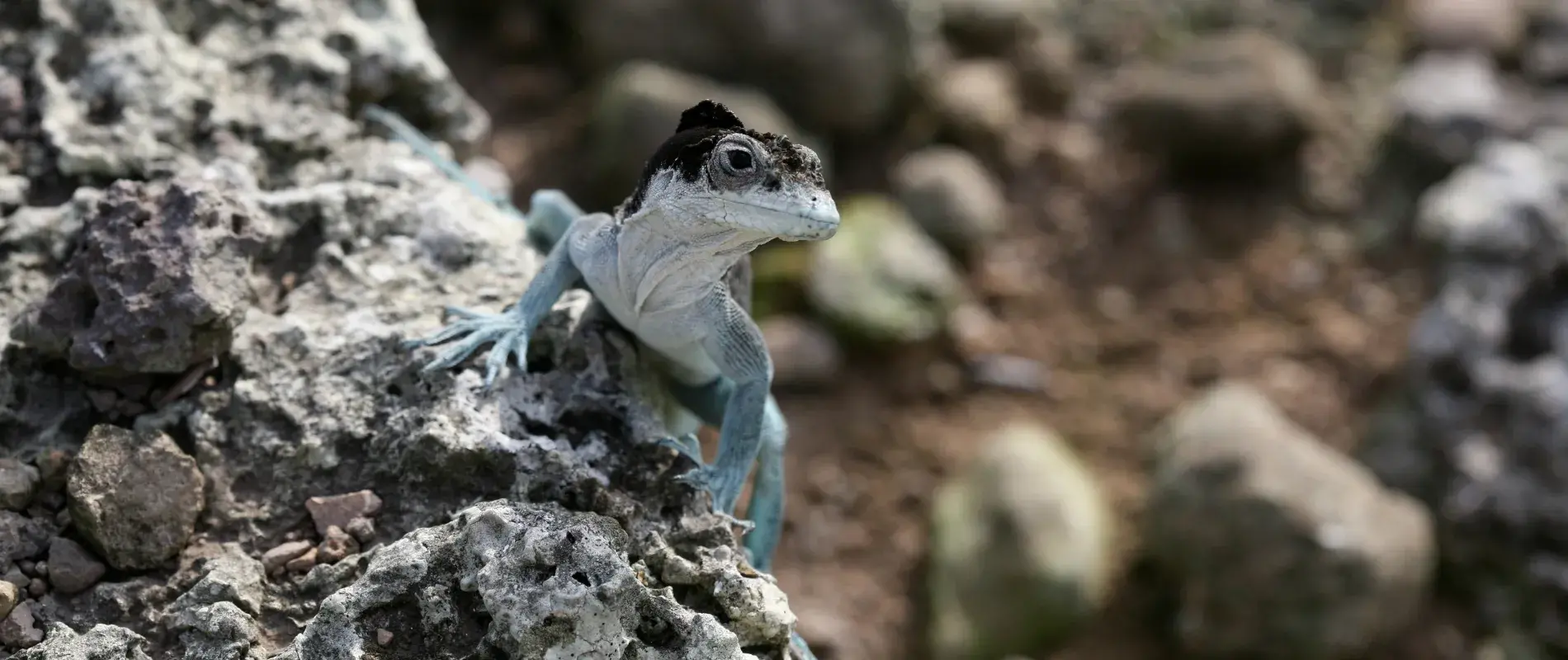
Note: Anolis del Malpelo, endemic terrestrial lizard.
506 kilometers from the Colombian coastline rises the impressive Isla de Malpelo, a corner of the Pacific Colombiano where marine life beats with strength. This territory, surrounded by deep and mysterious waters, is a true underwater paradise that shelters an immense natural wealth of marine biodiversity. In its waters, unique species find refuge in a protected environment. Malpelo is undoubtedly a marine protected area and a place where nature displays all its greatness and freedom.
Today, 30 years later, the Santuario de Fauna y Flora Malpelo remains a symbol of conservation for Colombia and the world. Recognized as a UNESCO World Natural Heritage Site, the sanctuary protects around 47,000 km² of ocean, preserving an important ecosystem habitat. Its existence represents a constant commitment to life and science. Three decades later, Malpelo continues to be a source of national pride. Learn more about its history and achievements.
You may also be interested in: The richness of colombian fauna in figures
Isla Malpelo: a journey through the milestones that protect life at sea
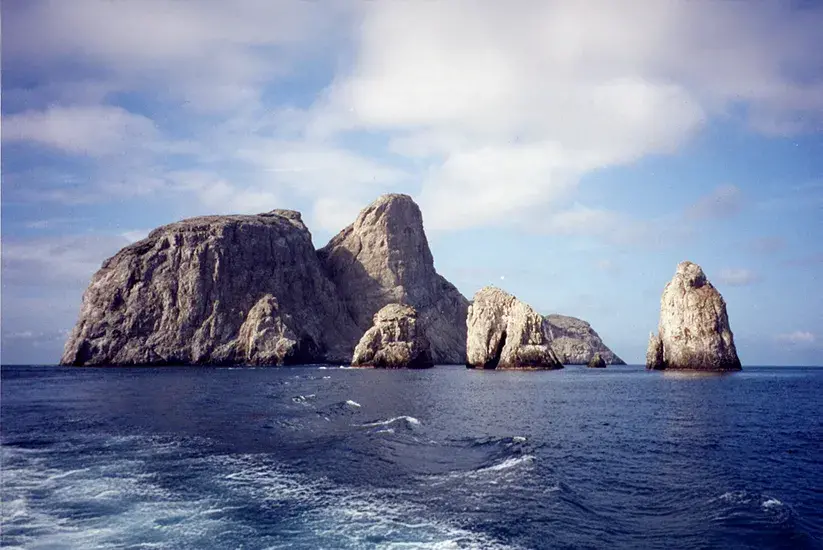
Note: Isla Malpelo.
1995 – Creation of the Santuario de Fauna y Flora Malpelo
The Government of Colombia declared Isla Malpelo and its surrounding waters as a Wildlife and Flora Sanctuary, managed by Parques Nacionales Naturales. This decision was driven by research and awareness work led by Sandra Bessudo, who, since the late 1980s, explored and documented the marine biodiversity of the area and the need for protection. Her work marked a milestone in conservation history and laid the foundation for the study and protection of the marine ecology of the Pacific Colombiano.
1999 – Fundación Malpelo y Otros Ecosistemas Marinos
To strengthen the conservation efforts, Sandra Bessudo founded the Fundación Malpelo y Otros Ecosistemas Marinos, which has since been a pillar in knowledge management, scientific monitoring, environmental education, and surveillance of the sanctuary. The Foundation became a strategic ally of Parques Nacionales, channeling national and international technical and financial support.
2006 – Declared UNESCO World Natural Heritage Site
One of the most notable milestones in the sanctuary's history was the nomination technically supported and led by Sandra Bessudo and her team at the Fundación Malpelo, who prepared the technical dossier submitted by Colombia to UNESCO. The declaration recognized the exceptional universal value of Malpelo as a habitat for migratory species and large hammerhead, silky, and Galápagos shark aggregations.
2010–2011 – Strengthening institutional protection and control against illegal fishing
From the High Presidential Council for Environmental Management, Biodiversity, Water and Climate Change, Sandra Bessudo promoted inter-institutional agreements that united efforts among the Armada Nacional, Parques Nacionales Naturales, and the Fundación Malpelo. This accomplishment reinforced national maritime sovereignty and solidified Malpelo as an example of sustainable protection and management in the seas of Colombia and the Pacific Colombiano.
2021 – Recognized as a “Blue Hope Spot” by Mission Blue
In 2021, the international organization Mission Blue, led by renowned oceanographer Sylvia Earle, declared Malpelo a “Blue Hope Spot”, one of the most important places on the planet for ocean health. This recognition reaffirmed the sanctuary as a blue lung of the Pacific and a submarine natural heritage.
Fundación Malpelo: protecting biodiversity in the Santuario de Fauna y Flora Malpelo
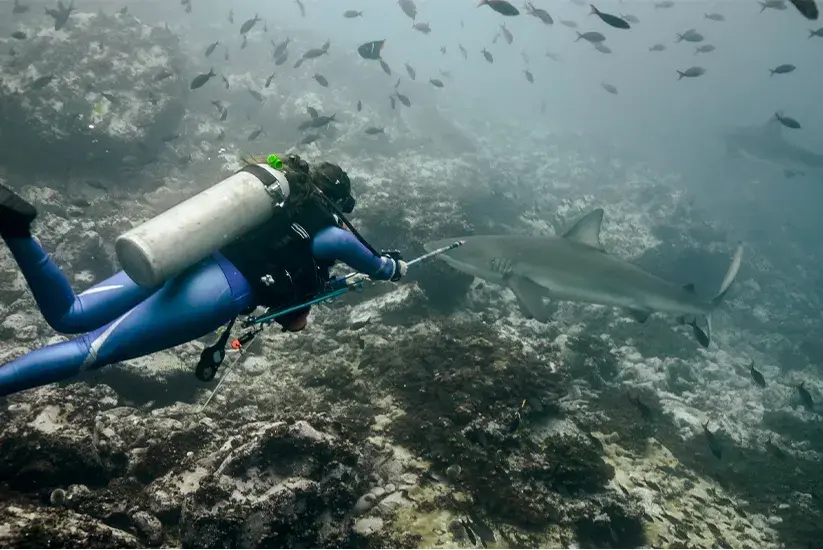
Note: Sandra tagging shark.
The Fundación Malpelo y Otros Ecosistemas Marinos promotes the protection and care of marine and coastal areas in Colombia and around the world, encouraging sustainable use of natural resources. Led by Sandra Bessudo, its work has been key to strengthening scientific research, monitoring, and environmental education around the sanctuary. Thanks to continuous work, Colombia has established a national and international collaboration network that protects marine life and raises awareness of the importance of caring for the oceans.
Three decades of achievements that make Malpelo a source of pride for Colombia
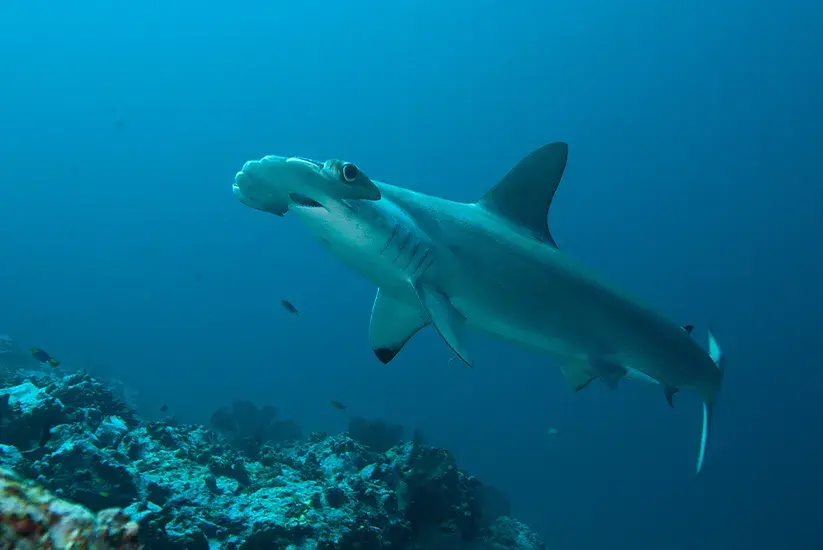
Note: Hammerhead shark, emblematic species of the sanctuary.
Thirty years later, the Santuario de Fauna y Flora Malpelo stands as a global example of marine conservation. The successive expansions of its protected area —in 2006, 2017, and 2022— have allowed the protection of an increasingly large oceanic territory, home to numerous species that find a safe refuge in these waters.
Thanks to continuous scientific work, today we have a better understanding of bony fish and shark populations, their migratory routes, and ecological roles within a fascinating ecosystem. Additionally, the promotion of sustainable ecotourism and environmental education led by the Fundación Malpelo has brought researchers, divers, and citizens closer to the importance of protecting our seas.
Finally, international recognitions —such as its designation as a Marine Jewel of Colombia, Ecologically or Biologically Significant Area (EBSA), Global Ocean Refuge (GLORES), and its inclusion in the IUCN Green List— reaffirm the impact of this collective effort. Today, Malpelo is a symbol of national pride and proof that in Colombia, marine ecology means commitment, knowledge, and care.