Welcome, you are in


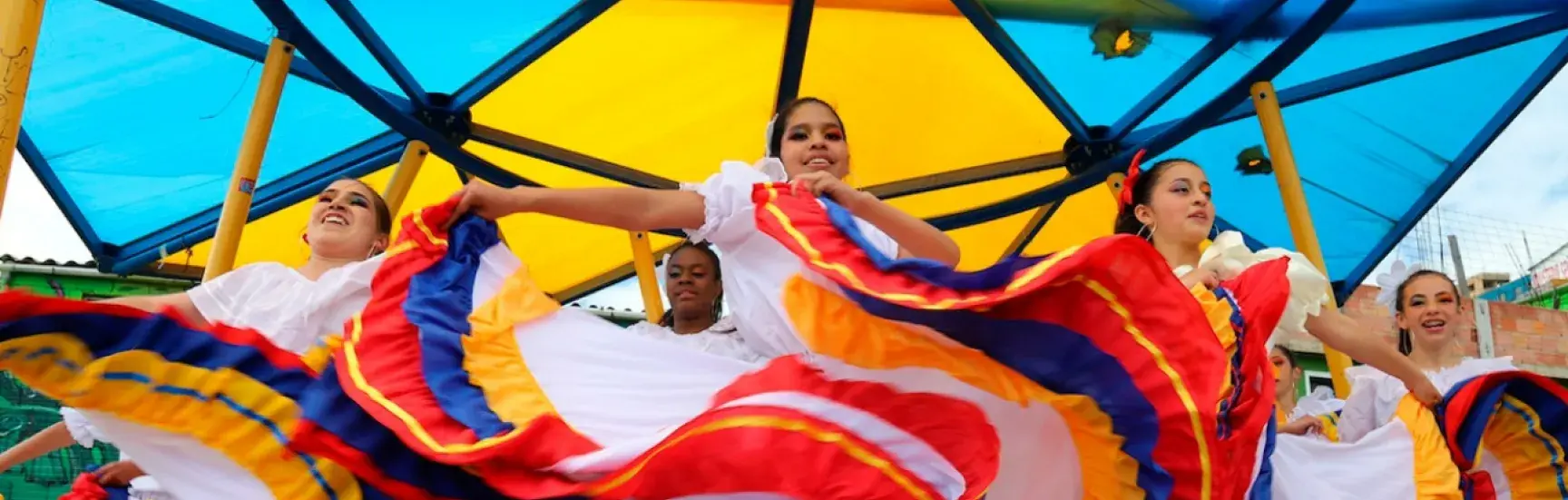


FIAV: the world of live arts in Bogotá
Discover FIAV, one of the most important live arts gatherings in Colombia, bringing together art, theater, dance, and circus performances with artists from around the world.

There are moments when the capital of the country of beauty transforms. Moments when its streets, theaters, and squares stop being everyday spaces and become stages where stories, movements, and emotions come to life. That is precisely what happens with the FIAV, an event that not only brings together the magic of the performing arts, but also reaffirms Colombia as a cultural meeting point for the world.
Discover what the FIAV is, why it has become a key event within the country’s cultural programming, and how this festival connects with an artistic tradition that has shaped Colombia’s history.
What is the FIAV and why is it capturing the world’s attention?
The FIAV (Festival Internacional de Artes Vivas) is a major performing arts festival that transforms Bogotá into a global stage. In its second edition, this gathering confirms its consolidation as a space where cultures, languages, and forms of expression come together and engage in dialogue through art.
During the FIAV, the city comes alive with more than 100 productions presented in both theaters and public spaces. From traditional theaters to parks and squares, Bogotá’s stages become places where you can encounter art in its many forms.
One of the festival’s most valuable aspects is the diversity of its programming. National and international artists from countries such as Argentina, Canada, China, New Zealand, and Mexico participate, allowing Colombia to connect with different perspectives from around the world.
In addition, local talent plays a leading role. Colombian theater, together with proposals in contemporary dance, circus, and experimental art, demonstrates the creative strength of national artists. From established companies to emerging voices, Colombian actors and directors find here a space to share their vision. Each performance is a unique experience. In live performance, body expression and direct interaction with the audience make every staging unforgettable for spectators. That is precisely what defines the living arts: their ability to exist in the present, to transform with each performance and generate emotions that cannot be replicated.
The FIAV is also characterized by its biennial nature, meaning that it takes place every two years, making it a highly anticipated event within the country’s cultural agenda. This frequency allows it to consolidate a robust program and continue growing with each edition. In addition, its reach goes beyond the capital. Although Bogotá is the epicenter, the festival extends to other cities, bringing the artistic experience to different territories and strengthening cultural circulation in Colombia.
Today, the festival presents itself as a space where borders dissolve. The living arts function as a common language that connects territories, cultures, and emotions, allowing societies to recognize themselves in one another.
You may also be interested in: Discover Colombia through its music festivals
You may also be interested in: This is how the Carnaval de Negros y Blancos is experienced in Pasto

Where does the tradition of the living arts in Colombia come from?
To understand the importance of the FIAV, it is necessary to recognize the history that has paved the way for this type of gathering.
The living arts —which include theater, music, dance, circus, oral storytelling, and many other forms— are characterized by taking place in real time. They are experiences that depend on the encounter between artists and spectators, making them unique and deeply human expressions.
In Colombia, this relationship has been fundamental in consolidating a living cultural heritage that is in constant transformation. Over time, the country has built a strong tradition around the performing arts, positioning itself as a benchmark in the region.
One of the most important milestones in this history has been the Festival Iberoamericano de Teatro de Bogotá, an event that marked a before and after in the way Colombians relate to art. This festival not only placed Bogotá on the international cultural map, but also left a profound mark on the development of the sector. Behind this event was the legacy of Fanny Mikey, a key figure in the history of theater in Colombia. Her vision made it possible to consolidate a space where art could engage in dialogue with the world, planting a seed that continues to bear fruit in new cultural initiatives today. The FIAV embraces that spirit and projects it into the present. It is not a direct continuation, but rather an evolution that responds to the current dynamics of art and the need to continue strengthening cultural management in the country.
Today, the festival presents itself as a space where borders dissolve. The living arts function as a common language that connects territories, cultures, and emotions, allowing societies to recognize themselves in one another.
You may also be interested in: Discover Colombia through its music festivals

Why is the FIAV a showcase of Colombia’s cultural power?
Talking about the FIAV is talking about Colombia’s ability to create, bring people together, and inspire emotions. It means recognizing that the country not only produces talent, but also creates spaces where that talent can engage in dialogue with the world.
These types of events are essential because they strengthen cultural identity and consolidate the value of the arts as an essential part of society. Every production, every performance, and every encounter contributes to building a country that recognizes itself through its diversity and creativity.
In the end, what the FIAV leaves behind goes beyond its performances. It inspires new ideas and reaffirms something deeply felt: that Colombia is a country where art is alive. If you want to continue exploring the country of beauty, we invite you to discover more stories on our portal.